Know what your organization exposes to the internet.
Sonar finds your subdomains, open ports and services, matches them against known CVEs, and tells you what to fix first.
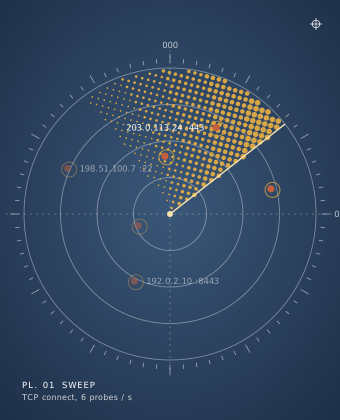
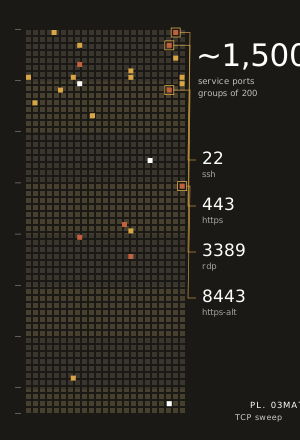
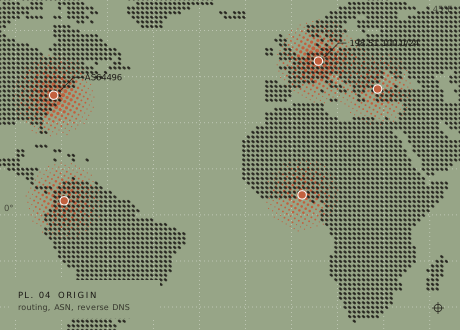
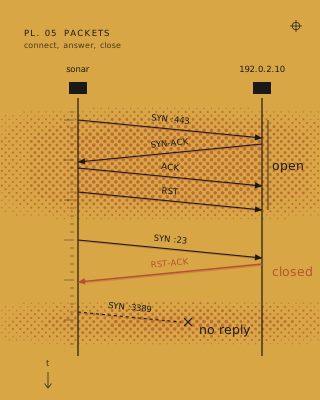
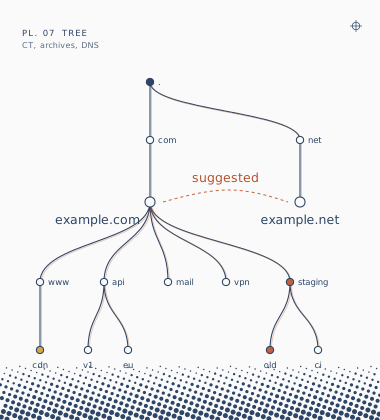
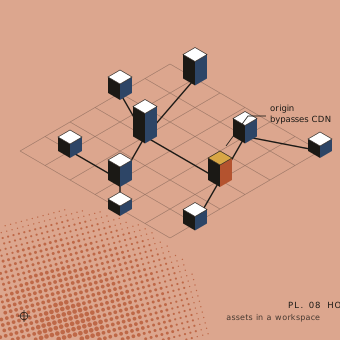
Plates 01–08Sweep, Seal, Matrix, Origin, Packets, Scope, Tree, Hosts
Look up any domain, IP or ASN.
The Public Index reads certificates, DNS, RDAP, upstream web records, routing and reverse DNS, and classifies each address — Tor exit, VPN, proxy, datacenter, cloud, residential or mobile. Free with a Tohou account, from 10 lookups a day.
Search the IndexFrom the first record to the fix.
Sonar works through your attack surface in a deliberate order. Each step is narrow on purpose.
Prove it is yours
Domains are verified with a DNS TXT record, public IPs with a hosted file. Sonar scans what has been verified, and nothing else.
Find every edge
Subdomains surface from certificate transparency, public archives, upstream feeds, your DNS records, your pages and scripts, and permutations of the names that exist. Related domains and a company's networks are suggested for your review, never scanned automatically.
Sweep at a measured pace
A TCP connect sweep of up to 1,504 curated service ports (228 on Free), in groups of 200, capped at six probes per second; Pro and Business sweep up to all 65,535 at no more than 25. Hosts behind Cloudflare, Akamai, Fastly, CloudFront and other CDNs are never port-swept; origins that bypass the CDN are flagged and fully assessed.
Read the web, name the CVE
TLS, security headers, technology fingerprinting and more than 60 read-only exposure signatures. Fingerprinted versions are matched to CVEs through upstream vulnerability databases and their version ranges, scored with CVSS v4, with the first fixed release named. Known mass-exploited issues and new additions to the known-exploited list trigger a targeted re-check of only the affected assets.
Go deeper, with consent
With operator, workspace and per-asset written consent, opt-in web application testing probes each endpoint for injection, reflected XSS, template injection, misconfiguration and exposed interfaces, and can scan behind a login. Every address is labelled by its infrastructure — Tor exit, VPN, proxy, datacenter, cloud, residential, mobile or abuse feed.
Keep watching
When new vulnerability data arrives upstream, Sonar matches it against software already recorded on your assets and alerts you without a new scan. On Starter and above the domain is watched too: RDAP expiry, transfer lock and around 300 typosquat variants, checked by DNS only.
Rank it, then say it once
Priority combines severity, known-exploited status, exploit-probability scores and asset criticality, with remediation SLAs attached. Alerts reach the console, Slack, Discord, Teams, PagerDuty and your SIEM, and open a ticket in Jira, Linear, GitHub or ServiceNow: one grouped alert per asset per scan.
For the team
Multi-tenant workspaces, with owner, admin and analyst roles for the people who share them on paid plans. Single sign-on with OIDC and SCIM provisioning on business and enterprise plans.
Read-only connectors for AWS, GCP, Azure and Cloudflare pull in public cloud assets and flag misconfigurations — discovered hosts stay suggestions until an admin approves them.
An internal-network agent you run yourself reaches private ranges you authorise, over an outbound connection with no inbound ports, so internal services appear beside your external surface.
Compliance reports map findings to SOC 2, ISO 27001, PCI DSS, NIST CSF, HIPAA, CIS and NIS2 controls. A versioned REST API at /v1 uses scoped, expiring keys, read-only on Starter and full from Pro, with JSON and CSV exports.
Threat intelligence, matched to what you run.
A feed of threats is noise until it meets an inventory. Sonar records the software and versions on your assets, so when upstream data names the affected releases of a new CVE, the match is made against what you actually run — and you hear about it without waiting for the next scan.
Known mass-exploited issues are matched the same way, and a new entry on the known-exploited list re-checks only the assets it affects. Each finding names the first release that fixes it; distribution builds, where fixes are often backported, are marked for confirmation rather than asserted.
Every address is classified from public reputation data — Tor exit, VPN, proxy, datacenter, cloud, residential or mobile — so you can tell a customer’s office from an anonymiser, and spot one of your own hosts sitting somewhere it shouldn’t.
Findings are ranked by severity, known-exploited status, exploit probability and asset criticality, then delivered once per asset per scan — to the console, Slack, Discord, Teams, PagerDuty or your SIEM, or as a ticket in Jira, Linear, GitHub or ServiceNow.
How matching worksNew CVE matched · critical
CVE-2026-109618shop.example.com
php 8.3.20, recorded at last scanUpgrade php to 8.3.36 or laterconsole · #securityProducts
- SonarExternal attack surface management. Verify a domain or address, then find the subdomains, ports, services and CVEs behind it, ranked by what to fix first.
- Public IndexPassive lookup for any domain, address or ASN: certificates, DNS, registration, routing, reverse DNS and infrastructure classification. Free with an account.
- ReefFirst-party threat intelligence from Tohou's own inbound sensors — which CVEs are being exploited right now, and which addresses are doing it.
Search the Public Index.
Type a domain, an IP address or an ASN. The record opens in the Index.
- A
- 192.0.2.10
- MX
- mail.example.com
- Cert
- CN example.com · SAN www, api, mail
- RDAP
- transfer lock set
- Route
- AS64496 · 192.0.2.0/24
- rDNS
- 192.0.2.10 → www.example.com
Start free. Grow when you need to.
- Free$0
- Starter$11.99
- Pro$35.99
- Business$99.99
- EnterpriseCustom